
Saudi Arabia’s entertainment sector has evolved rapidly from a national diversification initiative into a globally relevant leisure market. The transformation underway reflects not only the scale of new venues, attractions, and events, but also the structure supporting their delivery. Regulation, licensing frameworks, destination led giga developments, and a growing calendar of repeatable large scale experiences are combining to create a leisure ecosystem with increasing predictability and resilience.
This shift matters for the global leisure economy. Saudi Arabia is no longer viewed solely as an emerging entertainment market. It is increasingly positioned as a destination with the scale, ambition, and operational depth required to influence global leisure flows, investment decisions, and competitive dynamics across entertainment, tourism, retail, and hospitality.
Why Saudi Arabia’s entertainment expansion matters globally
Three structural developments are reshaping the Kingdom’s role in the global leisure economy.
First, visitor demand is becoming structurally predictable. Seasonal programming, permanent entertainment districts, and multi city event calendars are reducing reliance on one off activations. This supports planning certainty for operators, suppliers, and investors.
Second, supply is being accelerated through integrated giga project platforms. Entertainment assets are no longer developed in isolation. They are embedded alongside retail, hospitality, residential, transport, and digital infrastructure, enabling scale and efficiency from day one.
Third, Saudi Arabia is increasingly treated as a priority growth market by global entertainment operators and brand owners. This is raising quality benchmarks and accelerating the introduction of world class experiences across live events, attractions, and immersive formats.
Together, these dynamics signal a shift from experimentation to execution.
A fast growing market with clear momentum
The Saudi entertainment and amusement market continues to expand at a pace that outperforms many established leisure destinations. Market estimates indicate total sector value of approximately USD 2.6 billion in 2025, with projected growth to nearly USD 4.8 billion by 2030. This reflects a compound annual growth rate exceeding 12 percent across the second half of the decade.
Growth is supported by several reinforcing drivers:
• Rising domestic consumption driven by a young and urban population
• Expanding inbound tourism volumes
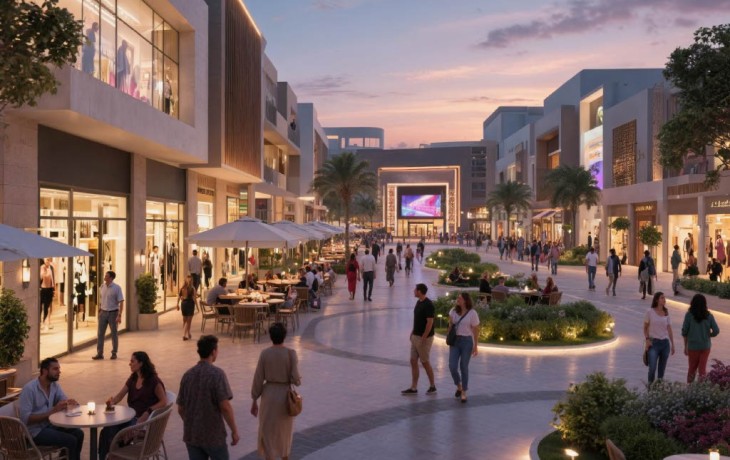
• Rapid development of destination scale entertainment assets
• Increasing frequency of large scale national events
At a global level, the broader entertainment and media sector is projected to approach USD 3.5 trillion in annual revenues by the end of the decade. Experiential categories remain among the fastest growing segments within this total. Saudi Arabia’s entertainment build out is increasingly positioned to capture a share of this growth as assets transition from development to operation.
Visitor demand is already material and widely distributed
Footfall provides one of the most reliable indicators of real economic traction. Recent performance across Saudi Arabia’s entertainment sector highlights both scale and geographic reach.
During the third quarter of 2025, entertainment activities across the Kingdom recorded:
• 12.6 million visitors
• 468 licensed entertainment events
• Activity spanning 116 cities
• 6,499 licensed companies operating across the sector
These figures demonstrate more than headline volume. They reflect depth across multiple regions, formats, and operating models. Entertainment activity is no longer concentrated in a single urban hub. It is distributed across major cities, secondary markets, and emerging destinations.
This distribution supports workforce development, local supply chains, and consistent service quality at a national scale.
Flagship seasonal programming provides an additional signal of demand maturity. Riyadh Season surpassed 16 million visitors by early 2025, reinforcing its position as one of the region’s largest recurring entertainment platforms. Visitor volumes of this magnitude shift the strategic conversation from demand validation to capacity optimization.
Theme parks as anchor infrastructure for destination economies
Globally, theme parks function as anchor infrastructure rather than standalone attractions. They extend length of stay, increase average spend per visitor, and support year round demand across adjacent sectors.
Saudi Arabia’s theme park strategy has entered a more operational phase. A key milestone is the scheduled opening of Six Flags Qiddiya City at the end of 2025. Positioned within a broader entertainment and leisure destination near Riyadh, the project represents a significant addition to the Kingdom’s permanent entertainment supply.
From a destination development perspective, large scale theme parks deliver several strategic outcomes:
• Increased repeat visitation through permanent attractions
• Enhanced ability to host family and group tourism
• Strong integration with retail, food and beverage, hospitality, and live events
• Higher dwell time within entertainment districts
As additional assets move from construction into operation, theme parks are expected to play a central role in shaping visitor itineraries and spend patterns.
Rising interest from global entertainment brands
One of the clearest indicators of market maturity is growing interest from international entertainment and destination operators. Saudi Arabia’s scale, investment momentum, and long term policy clarity are attracting global attention across theme parks, live entertainment, and immersive experiences.
This trend carries several implications for the domestic market:
• Higher benchmarks for experience quality and operational excellence
• Increased emphasis on intellectual property driven attractions
• Growth in premium ticketing, merchandise, and themed food and beverage
• Stronger competition for talent and specialized operating expertise
As global brands evaluate long term expansion strategies, Saudi Arabia increasingly features as a core growth geography rather than a peripheral opportunity.
What differentiates the Saudi entertainment model
Saudi Arabia’s entertainment expansion is often described in terms of scale. The more strategic differentiator lies in sequencing and ecosystem development.
Demand creation preceded large scale asset delivery. Recurring seasons and national programming established visitor habits and consumption patterns before permanent infrastructure came online.
Regulatory and licensing frameworks matured in parallel with demand growth. This supported market entry, operator diversity, and service quality control.
Anchor assets are now entering operation. Theme parks and destination scale entertainment zones are expanding dwell time and diversifying visitor segments.
Global brand participation is accelerating ecosystem maturity. Partnerships, licensing models, and operating standards are raising performance across the sector.
This sequencing reduces volatility and supports sustainable long term growth.
Spillover effects across the wider economy
Entertainment growth generates significant spillover across consumer facing sectors. Increased footfall translates directly into demand for retail, food, hospitality, and logistics services.
Retail and food & beverage
Large entertainment destinations drive higher impulse purchasing, premium food and beverage consumption, and branded merchandise sales. FMCG companies benefit from both in venue activation and broader citywide demand uplift during peak periods.
Temporary spikes during major events are increasingly complemented by baseline demand driven by permanent attractions.
Hospitality and tourism
Theme parks and dense event calendars support longer stays and more diversified visitor segments. Family tourism, midweek travel, and repeat visitation are becoming more prominent features of the Saudi tourism profile.
This supports hotel occupancy, food service growth, and transport utilization beyond traditional peak periods.
Agribusiness and food supply
Sustained visitor volumes place new demands on food supply chains. Cold chain performance, predictable sourcing, and high volume distribution into entertainment districts are becoming critical success factors.
This creates opportunities for agribusiness operators and distributors capable of delivering consistency, scale, and quality across high traffic locations.
What to watch through 2030
Several indicators will shape Saudi Arabia’s influence on the global leisure economy over the next five years.
• Operational performance of newly opened assets including repeat visitation and guest satisfaction
• Stability of quarterly visitor volumes across seasons and regions
• Growth in intellectual property driven attractions and partnerships
• Alignment between capacity delivery and market demand
Monitoring these factors provides insight into how quickly Saudi Arabia transitions from rapid build out to sustained operational leadership.
Bottom line
Saudi Arabia’s entertainment boom has reached a new phase. Multi million visitor volumes, nationwide event distribution, and destination scale assets are positioning the Kingdom as a meaningful node in the global leisure economy.
For global operators, brands, and adjacent sectors, including retail, hospitality, FMCG, and food supply, Saudi Arabia now represents a market that demands strategic attention. The system supporting entertainment growth is structured, scalable, and increasingly predictable.
As more assets become operational and visitor flows stabilize, Saudi Arabia’s role in shaping global leisure patterns is set to deepen. The entertainment sector has become both a symbol and a driver of the Kingdom’s broader economic transformation.